
Mexico: A Cave Diver’s Dream - Exploring the Cenotes of the Yucatán Peninsula


For many cave divers, it’s a dream to visit Mexico at least once in their lifetime and explore some of the most spectacular underwater cave systems in the world.
After successfully qualifying as a Full Cave Diver the previous year, I knew that Mexico had to be my next big diving adventure. I just had to make it happen!
I waited until January, when conditions are generally more favourable during the dry season and the risk of hurricanes is lower. This would also be my first transatlantic trip, making the adventure even more exciting.
I had always wanted to visit Mexico, not only for its world-famous cave diving but also for its ancient Mayan civilisation, fascinating historical sites, and, of course, its excellent food!
I arranged a tailor-made itinerary with a local dive centre in Tulum, allowing me to explore specific cave systems I had been eager to dive, alongside some ocean diving.
Little did I know just how many incredible experiences awaited me over the coming days!
My First Days in Mexico: Mayan Ruins, Wrecks and Bull Sharks

My first day was spent adjusting to the new time zone and recovering from the jet lag. I also took the opportunity to visit some Mayan ruins, getting my first taste of the history and culture that make this part of Mexico so fascinating.

The following day, I was supposed to dive with bull sharks off Playa del Carmen. Unfortunately, I was informed that they had left the area earlier that season. Instead, we explored a wreck and then a nearby reef in the area where the sharks would normally be encountered.

That same evening, I headed out for a night dive at a cenote near Tulum, famous for its resident crocodile!
We didn't find him until the very end of the dive, but what an experience! Diving in darkness, surrounded by the mysterious underwater world of a cenote, was an unforgettable way to begin my Mexican diving adventure.
Then came the part I had travelled all this way for.
It was time to go cave diving!
Dream Gate Cenote: Three Hours Beneath the Jungle

My first proper cave dives in Mexico took place at Dream Gate Cenote, deep in the jungle.
We spent more than three hours exploring the system. First, we followed the downstream line, eventually emerging at El Holandés Cenote. We then returned through the cave before exploring the upstream line, which included some tighter restrictions deeper inside the system.
Dream Gate is beautifully decorated with cave formations, but what makes it particularly distinctive is its darker appearance. The dark brown limestone gives the cave a completely different atmosphere from the bright white limestone systems found elsewhere in the region.
It was a fantastic introduction to Mexican cave diving, and a reminder that even caves located relatively close to one another can look and feel entirely different.
El Holandés Cenote: A Hidden Entrance in the Jungle

Very little information about El Holandés Cenote appears to be readily available online.
Hidden within an overgrown section of jungle, we accessed this cenote directly from the downstream cave line at Dream Gate.
I was told that the name dates back to the early exploration of the system. During the initial mapping and sketching of the cave, explorers gave different sections informal names, some of which were later replaced with more formal ones.
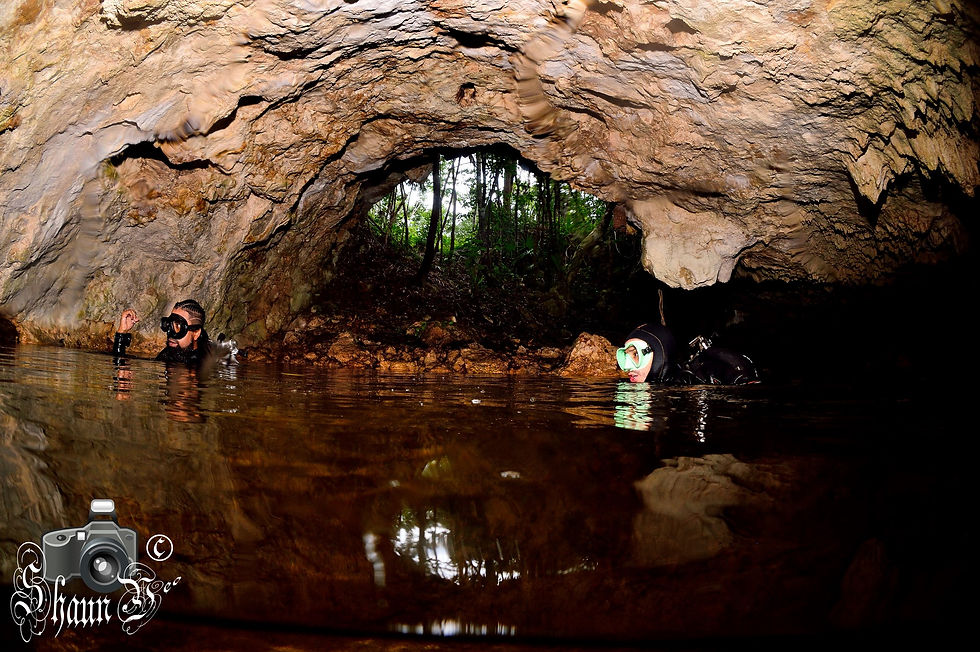
According to the account shared with me, El Holandés retained its name because of a Dutch cave diver who died in the area and whose body was recovered through this cenote.
It was a sobering story and a reminder that cave exploration has a long history of adventure, discovery, and risk.
Day Three: Car Wash and Chan Hol
The following day, we explored two very different cave systems: Car Wash and Chan Hol.
Car Wash Cenote - Aktun Ha

Car Wash is the well-known nickname for Aktun Ha Cenote, a site that reportedly earned its name because local taxi drivers once used the open-water area to wash their vehicles.
Leaving the cavern zone behind, we followed the cave system towards Zacil Ha Cenote before reaching the spectacular Room of Tears.

This large chamber is filled with delicate, thin white stalactites hanging from the ceiling, creating an incredible contrast against the surrounding darkness.
After exploring the chamber, we retraced our route through Zacil Ha and eventually returned to Aktun Ha.

It was another fascinating dive, with delicate formations and a completely different atmosphere from Dream Gate.
Chan Hol Cenote - A Cave of Ancient Secrets

Chan Hol was something else entirely.

This system is reserved for suitably qualified cave divers, with no conventional cavern zone open to recreational cavern diving. Access begins through a small, muddy opening in the jungle, which gives little indication of the extraordinary world waiting beneath the surface.
Once inside, the cave opens into beautiful white limestone passages and large chambers decorated with impressive formations.
But Chan Hol is not just remarkable for its geology. Archaeological discoveries have also made this cave famous.

Mayan pottery and the remains of humans and animals have been found within the system. A human skeleton discovered approximately one kilometre inside the cave attracted considerable attention because of its estimated antiquity. Reports also indicate that the remains were subsequently stolen.
The cenotes held enormous spiritual significance for the ancient Maya, who associated them with the underworld and the gods. They were important places for offerings and rituals, which in some cases included human sacrifice.
Exploring a cave like Chan Hol, knowing that it contains evidence of both ancient human activity and the natural history of the Yucatán Peninsula, adds another dimension to the experience.

You are not simply swimming through a cave. You are travelling through a place where geology, archaeology, and human history intersect.
Day Four: Nohoch Nah Chich and Taak Bi Ha
The next day brought two more very different cave systems: Nohoch Nah Chich and Taak Bi Ha.
Nohoch Nah Chich Cenote

At Nohoch Nah Chich, we made a jump from the cavern line to the main cave line and spent the rest of the dive exploring the system.
Compared with some of the darker caves I had visited, this system felt much brighter. The way light reflects off the limestone walls creates a very different visual experience.
It really demonstrates something I was beginning to appreciate throughout the trip: Mexico has hundreds of cenotes and extensive underwater cave systems, yet no two dives necessarily feel the same.
The geology, visibility, light, and formations all contribute to the character of each cave.
Taak Bi Ha Cenote

Taak Bi Ha offered another incredible experience.
We made a jump from the cavern line to the main line and then, approximately ten minutes into the main line, made another jump onto the IMAX line, which continues towards the Dos Ojos cave system.
Around 50 minutes into the dive, we reached a large air pocket. This was our turnaround point, as we had reached our planned turn pressure.
One of the most memorable features was the sight of bats flying around inside the cavern chamber.
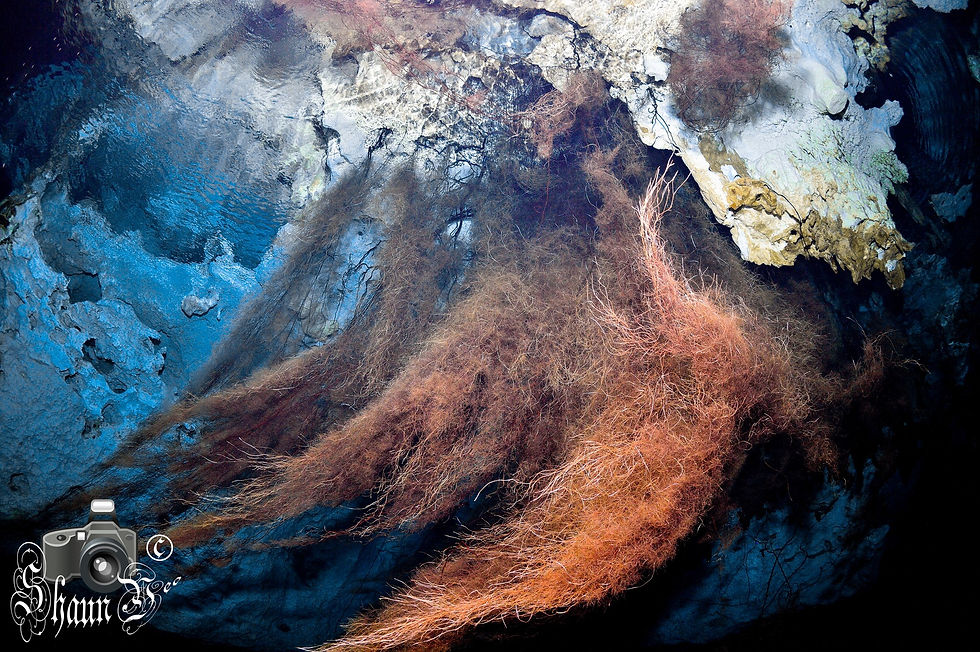
I was also fascinated by the tree roots penetrating the cave ceiling. These roots extend down from the jungle above, reaching towards the water below and providing a striking visual connection between the surface environment and the hidden world beneath it.
It's incredible to think that, above us, the jungle continues its daily life while an entirely different environment exists just metres below.
Day Six: Eden and Tajma Ha
Two more cenotes were on the itinerary: Ponderosa, also known as the Gardens of Eden, and Tajma Ha.
Tajma Ha Cenote - A Subterranean Moon Landscape

Although I have seen plenty of impressive cave formations, Tajma Ha quickly became one of my favourite cave dives of the trip.
The deeper cave sections I explored did not rely on the traditional spectacle of stalactites and stalagmites. Instead, they featured extraordinary white, rocky landscapes resembling the surface of the Moon.

The deep blue water, pale limestone, and mirror-like haloclines created an almost surreal environment.

The transition between freshwater and saltwater produces a visible distortion known as a halocline, where the different densities and refractive properties of the water create a shimmering, mirror-like effect.
The photographs and videos simply do not do this place justice.
WOW!
It was one of those dives where you find yourself stopping to take in the surroundings, trying to appreciate what you are seeing.
And just to be clear, I am talking about the deeper cave zone, not the cavern chambers, which have a completely different character.
Ponderosa Cenote - The Gardens of Eden

Ponderosa, better known as the Gardens of Eden, was another beautiful system.
Once beyond the cavern zone, the cave opened into white limestone passages. We took a jump approximately 200 metres into the cavern zone, eventually descending to around 13 metres, where the freshwater and saltwater meet.
We spent the entire cave portion of the dive within the halocline, making for an interesting visual experience.
The system branches into different lines, with routes leading to different cenotes.
I didn't encounter the same abundance of traditional stalactite formations here, but that certainly didn't make the dive any less worthwhile.
Once again, the cave offered something different from everything I had seen before.
Angelita Cenote: Descending into Another World
As my first full week of diving approached its end, we headed to Angelita and Taak Be Luum.

Angelita is one of the most surreal cenotes in the Yucatán Peninsula.
From the surface, it looks like a seemingly ordinary jungle sinkhole. But descend to around 30 metres, and you encounter a thick, ghostly cloud of hydrogen sulphide.

This layer forms from the decomposition of organic material that has accumulated in the sinkhole over time. The resulting environment creates one of the most extraordinary visual effects in cenote diving.
Below the cloud, the water becomes saltier and the light fades dramatically.
As we passed through the hydrogen sulphide layer, I noticed a rotten-egg smell inside my mask. Hydrogen sulphide is toxic, so this is an environment that requires careful planning, appropriate training, and strict adherence to the dive plan.
Once through the roughly three-metre-thick cloud, the dive transformed into what felt like a night dive.
Above us was freshwater; below us, saltwater. The boundary between the two, combined with the darkness and the cloud itself, made the entire place feel otherworldly.
We descended to approximately 45 metres on air, with the bottom of the sinkhole extending to around 60 metres. We completed a few minutes of decompression during the ascent, incorporating a visit to a small cave opening along the way.

Inside, we could see calcified animal bones, stalactites, and evidence of former water levels associated with changes in climate and sea level during the Ice Age.
It was a fascinating dive, combining geology, environmental history, and an almost alien underwater landscape.
Angelita is one of those places that is difficult to describe properly to someone who has never experienced it.
Taak Be Luum: Strange Formations in the Darkness

Taak Be Luum offered another unusual underwater landscape, famous for its bizarre, bubble-like formations that resemble melted wax.
These strange structures look almost as though they belong in a fantasy film, rather than beneath a Mexican jungle.

Their precise formation and development are subjects of geological interest, and they make this sinkhole particularly distinctive.
By this point in the trip, I had begun to realise that every cenote seemed to have its own identity, whether defined by its limestone formations, haloclines, archaeological significance, or the way light entered the water.
There was always something new to discover.
Back to the Sea: Puerto Morelos
The following day, we finally returned to the sea.
I had originally planned more ocean dives, but unfortunately, the sea conditions had not been favourable. Fortunately, the weather affecting the sea did not prevent us from continuing with our cave-diving itinerary, and I actually ended up completing more cave dives than I had initially expected!
We headed to Puerto Morelos for a wreck and reef dive.

The reef was colourful and full of marine life, with beautiful corals providing a welcome change from the enclosed world of the caves.

We also explored the C-56 Juan Escutia, a former naval vessel that now serves as an artificial reef and popular scuba-diving site.
After spending so much time beneath the jungle, it was great to return to the open sea and experience another side of Mexico's underwater world.
Dos Ojos Cenote: One of Mexico's Most Famous Cave Systems
To finish the trip, I had two more days of cave diving planned.
The first included Dos Ojos and El Pit, followed by Zapote and Maravilla on the final day. These last two sinkholes were located farther away from the other cenotes I had visited throughout the previous week.

Dos Ojos is undoubtedly one of the most famous cenote systems in Mexico, and I couldn't leave without diving it.

We explored mainly within the cavern zone of the Barbie Line. I had already visited parts of the wider system through other cenote entrances during the preceding days.
To be completely honest, after seeing so many extraordinary caves throughout the trip, Dos Ojos was interesting, but it wasn't the biggest highlight for me personally.
For someone exploring a cavern for the first time, however, I can imagine it would be absolutely incredible!
El Pit Cenote - Into the Depths

El Pit is another spectacular sinkhole in the Yucatán jungle.

Like Angelita, it contains a hydrogen sulphide layer, creating a striking division between the water above and the darker environment below.
The sinkhole descends to approximately 60 metres, with deeper sections extending towards 100 metres. Exploring those depths requires the appropriate technical training, gas planning, and decompression procedures.
There is also an extensive underwater cave passage in the shallower freshwater section, connecting El Pit with the wider Dos Ojos cave system.
It is remarkable to think that what appears to be an isolated sinkhole from the surface is actually connected to an enormous network of underwater passages.
Zapote Cenote: The Mysterious Hells Bells
Zapote was one of the most unusual places I visited during the entire trip.

This sinkhole is famous for its distinctive formations, nicknamed Hells Bells, which resemble enormous stone bells hanging underwater.
These formations are found in only a limited number of caves in this region and are particularly unusual because of their shape and apparent development.
Scientists believe the Hells Bells are actively growing underwater rather than simply being remnants of formations created when the caves were dry.
They occur at around 30 metres, near the boundary between the hydrogen sulphide layer and the mixing zone between freshwater and saltwater. This unusual environment appears to be important to their development.

Seeing these formations in person was incredible. Their shapes are so unusual that they almost look artificial.
But they are entirely natural, formed through geological processes that we are still working to understand fully.
It is a powerful reminder that even in a world we think we know, nature continues to surprise us.
Maravilla Cenote: Light Beams and Hidden Life
My final cenote dive was at Maravilla, another spectacular sinkhole in the jungle.

Like Angelita and El Pit, Maravilla contains a halocline and a hydrogen sulphide layer. It also features unusual bell-like formations, making it another fascinating location to explore.

However, Maravilla is particularly famous for its incredible beams of sunlight, which can penetrate deep into the water and illuminate the sinkhole when the weather and the sun's position are just right.
Unfortunately, these conditions depend on the timing and the weather, but when everything aligns, the light beams transform the sinkhole into something extraordinary.
I was also fortunate enough to see blind cave fish, another reminder that life can survive in these dark, isolated environments.
It was a fantastic way to finish the trip.
Final Thoughts: A Dream Trip for Any Cave Diver
Looking back, Mexico exceeded my expectations.
Over the course of the trip, I explored an incredible variety of underwater environments, from dark brown limestone caves and beautifully decorated white passages to vast chambers, mirror-like haloclines, hydrogen sulphide clouds, and bizarre formations that look as though they belong on another planet.
Every cenote was different. Some impressed me with their formations, others with their light, geology, or sheer scale. Others left me thinking about the ancient Maya, the archaeological discoveries hidden beneath the jungle, and the geological history preserved within these flooded caves.
What fascinated me most was realising just how much variety exists within one region. Two cenotes can be located relatively close to one another, yet offer completely different diving experiences.
There were also a few changes to the original itinerary, particularly due to the sea conditions, but these gave me even more opportunities to explore the caves. In the end, I completed more cave dives than I had originally planned.
And that is what makes this type of adventure so special. You can plan an itinerary, research the sites, and watch countless photographs and videos, but nothing truly prepares you for being there yourself.
Mexico has given me memories that will stay with me for a lifetime, and I have only scratched the surface of what its underwater world has to offer.
For any cave diver dreaming of exploring Mexico, I can honestly say that it is an experience worth working towards.
The cenotes are more than just beautiful dive sites. They are windows into another world — a world of geological wonders, ancient history, hidden life, and passages that continue far beyond what we can see.
And after this trip, one thing is certain: Mexico will not be my last cave-diving adventure. There are still so many caves to explore, and I cannot wait to return!
Below are videos of my cave dives in Mexico, as well as diving the Mexican Sea and Night Diving with Crocodiles!:


Comments